KNIFE Context Aware Approach in SDLC
(SDLC – Solution Development Life Cycle)
🎯 What it solves (purpose, goal)
No solution in any domain exists in isolation — it lives within a specific context that fundamentally shapes what is being built. It follows naturally that every solution must begin with understanding that context. This spans a wide range of topics: people, processes, technology, politics, market conditions, and more. In this article we focus on describing context for delivering IT solutions, but the principles apply broadly.
V-Model – Verification and Validation Model – Historical Foundation of SDLC
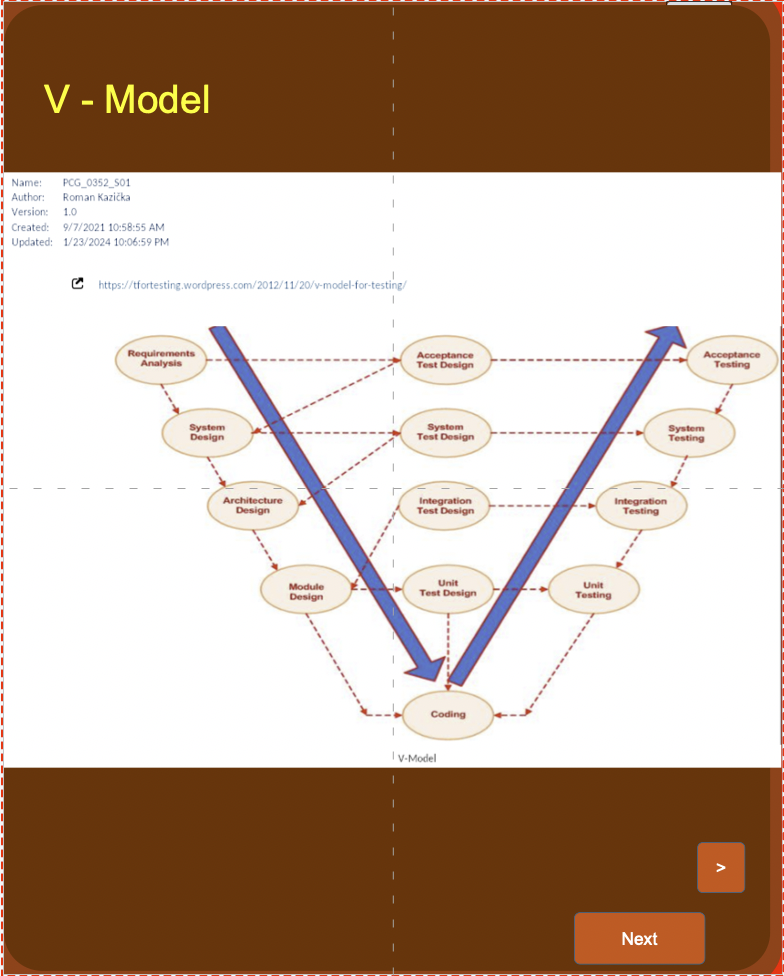
V-model is a graphical representation of a Systems Development Lifecycle in which activities such as requirements analysis, system design, and implementation are directly connected to validation activities like acceptance testing, system testing, and integration testing. This creates a "V" shape, where the left side represents specification and design, the bottom represents implementation, and the right side represents testing and validation.
Although modern Agile and DevOps approaches introduced more iterative workflows, many core principles of the V-Model still survive inside contemporary SDLC practices — especially the strong linkage between requirements, implementation, and verification.
It is used to produce rigorous development lifecycle models and project management models. The V-model falls into three broad categories:
- the German V-Modell,
- a general testing model,
- and the US government standard.
Reference: https://en.wikipedia.org/wiki/V-model
Origin
The V-Model has two parallel origins that developed independently:
Barry Boehm (USA, 1979) – American software engineer who first described the V-shaped lifecycle with emphasis on verification and validation at each development phase.
US variant – Kevin Forsberg and Hal Mooz developed it in parallel, drawing from systems engineering for defense and aerospace projects. The V-model first appeared at Hughes Aircraft around 1982 for an FAA programme, later spreading through NASA and US defense procurement.
German variant (V-Modell) – Developed by IABG in Ottobrunn near Munich in cooperation with the Federal Office for Defense Technology, originally for the German armed forces. In 1992 the German Ministry of the Interior adopted it for civilian public administration. In 2005 an updated version was released: V-Modell XT (eXtended).
Why few people know it today
Agile pushed the V-Model to the sidelines from the early 2000s. In corporate and banking environments, however, the V-Model never disappeared – it was renamed or absorbed into other frameworks: PRINCE2, regulatory methodologies, FDA validation, automotive SPICE.
For regulated environments (banking, healthcare, defense) the V-Model remains a de facto standard – because regulators require full traceability between requirement and test. Ignoring this foundation does not make it disappear; it makes the gap invisible until audit time.
The model did not die. It changed its name.
🧩 How it solves it (principle)
The V-Model provides the structural backbone — but the context in which it is applied defines everything.
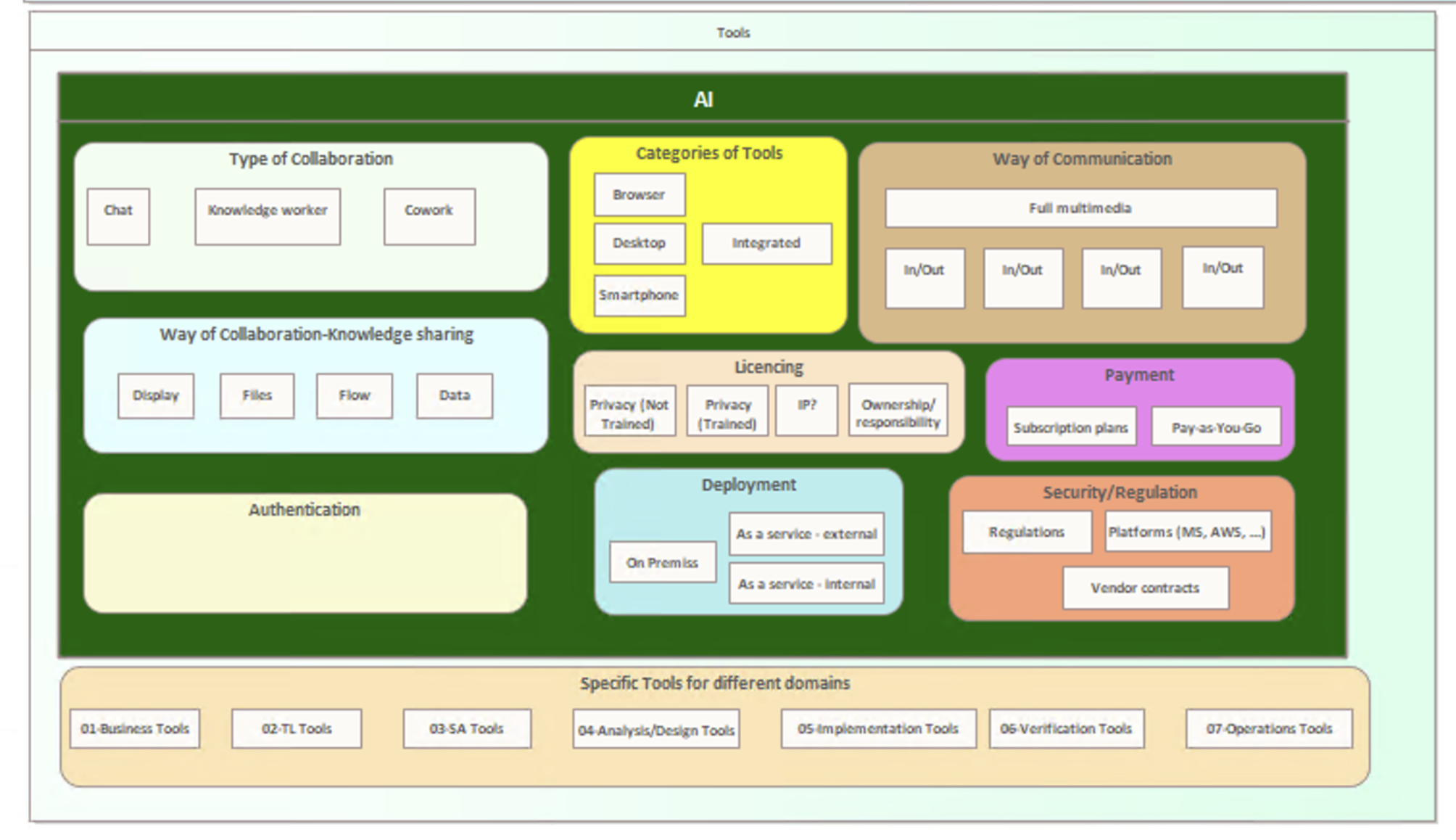
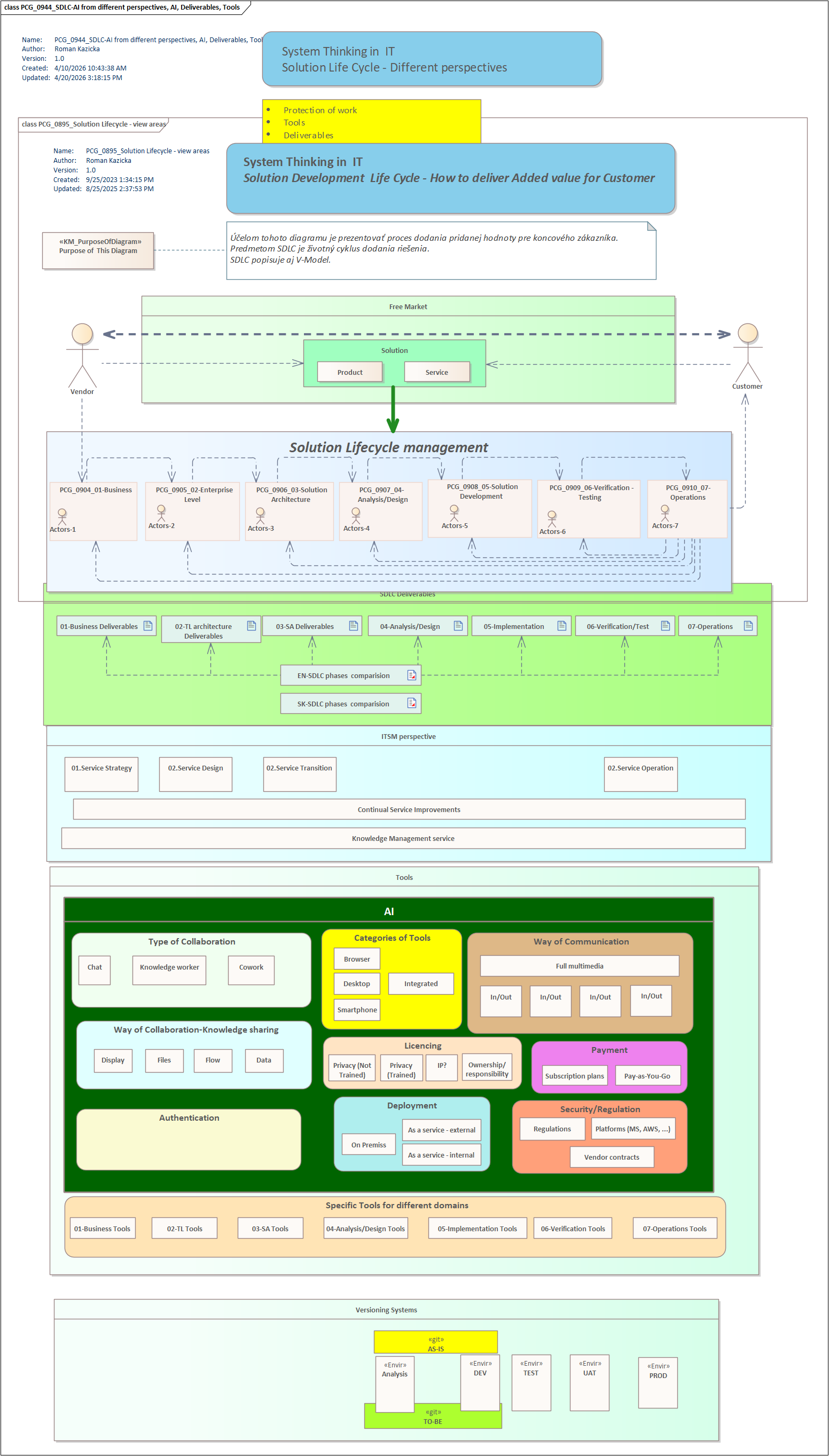
Visualizing context greatly helps with understanding it — which in practice means mapping the real world into a digital form. A wide spectrum of tools and applications is available for this purpose. Which one to choose, and what criteria to apply?
In our case, we emphasize the following principles and properties. Technologies should support these principles as broadly as possible.
1. Principles
- Without Communication — there is no Understanding
- Without Understanding — there is no Trust
- Without Trust — there is no good Collaboration
- Without good Collaboration — there is no Synergy
- Without Synergy — there is no Success
- One picture is worth a thousand words.
- One model is worth a thousand pictures.
- There is no good solution without pictures.
- This requires clarifying:
- what "good solution" means
- what "picture / diagram" means
- This requires clarifying:
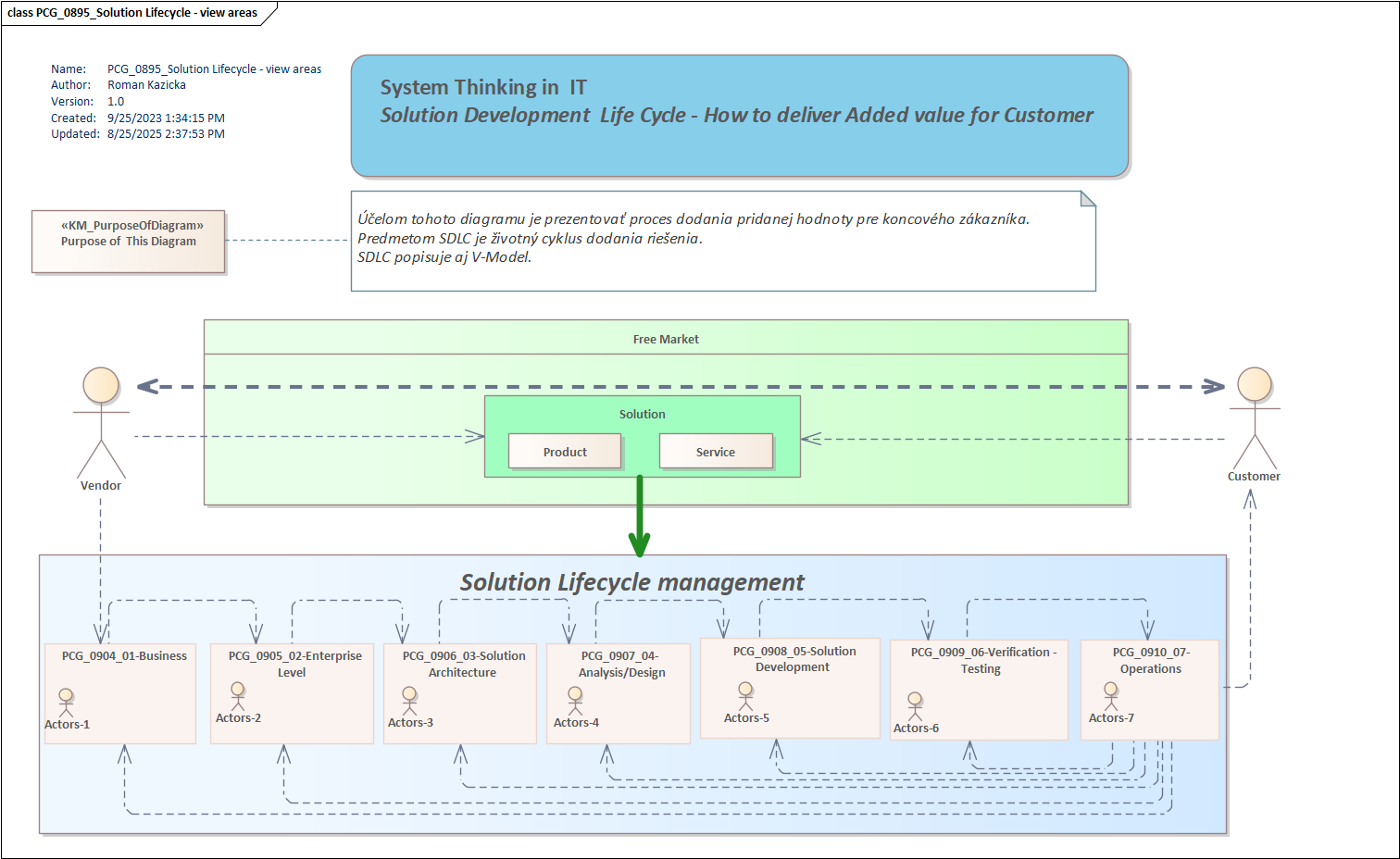
- Every solution passes through the basic phases defined in the V-Model:
Idea → High-Level Design → Analysis → Detailed Design → Implementation → Verification & Testing → Operations → Change Management
- The order, depth, and time spent on each phase depend on the solution — but every solution must at minimum go through a mental exercise from idea to operations, regardless of the delivery approach (Waterfall, Agile, hybrid).
2. Functional requirements for supporting tools across SDLC roles (brief, highly selective — depends on solution context and team/organization character)
- Simplicity and intuitiveness
- How many SDLC roles does the tool support?
- Degree to which a single technology satisfies the needs of individual roles
- Universal vs. specialized tool
- Openness of the technology:
- Interoperability
- Third-party integrations
- Modularity
- Ability to extend the system with new capabilities
- Support for workflow automation
- Interoperability
3. Non-functional requirements
- Market presence:
- Product/system reach in the market / specific domains / areas
- Availability of know-how
- Community
- Knowledgeable individuals within the organization
- Market longevity:
- Startup vs. established company
- Quality support
- Market and segment recognition
- University and broader community support
- Deployment options:
- On-premise
- On-client
- Cloud solution
- Mobile devices
- Licensing model:
- Floating licenses
- Dedicated licenses
- Payment model:
- One-time + upgrade/renewal
- Subscription
- Personal preferences:
- Positive past experience with the technology's features
- Existing knowledge of the product, including its strengths and weaknesses
🧪 How to use it (application)
When evaluating a specific technology, it is advisable to consider as many criteria as possible before starting the assessment. Every selection is individual and valid only within the specific context of a given organization, team, or person. When benchmarking, comparable criteria and comparable contexts must be established — otherwise the results will be misleading.
⚡ Quick Guide (Top)
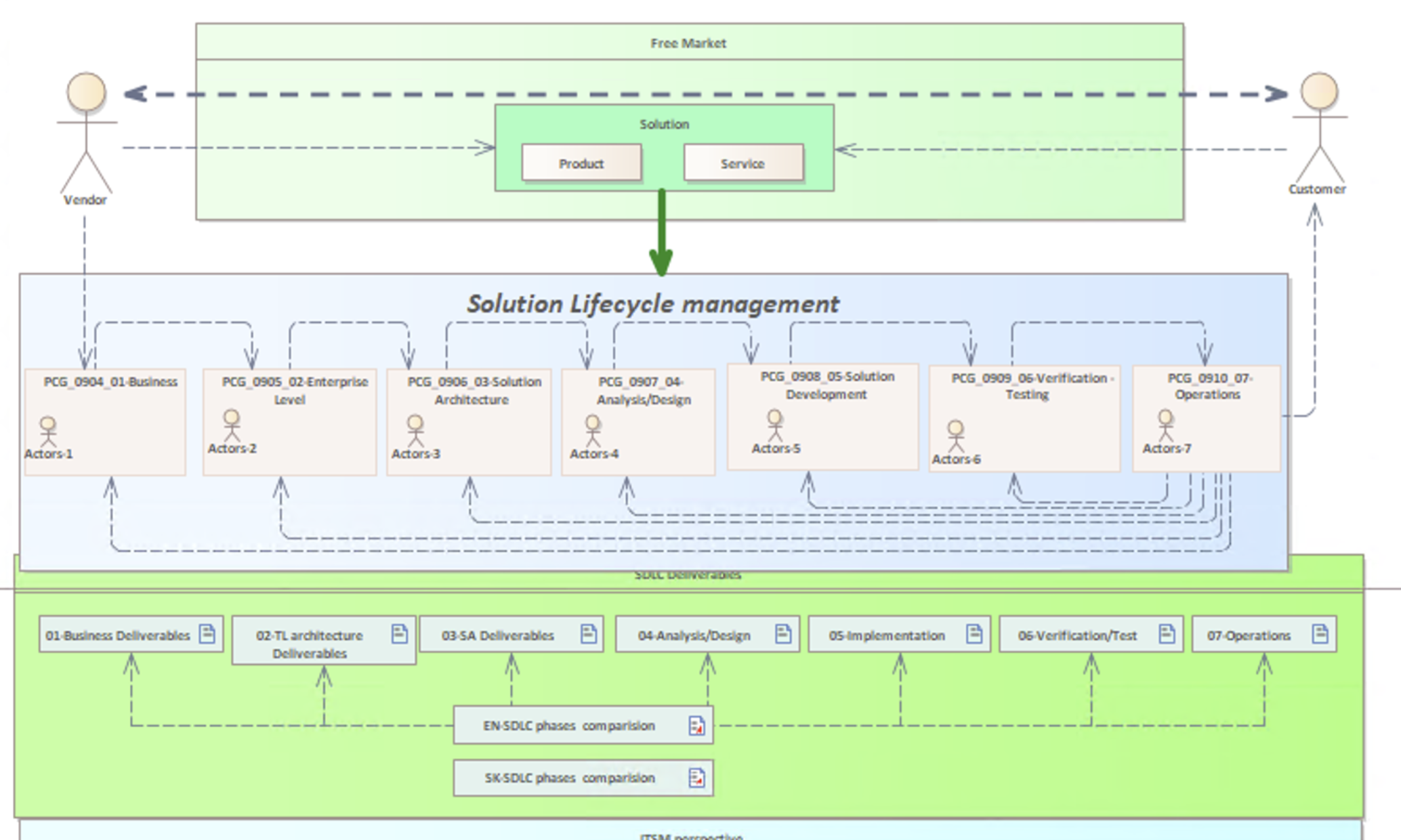
The following diagrams map the SDLC context from multiple perspectives — from the relationship between supplier and customer, through deliverables between phases, to tool assessment criteria.
📜 Detailed Article
Why do we draw pictures? (sketches, diagrams, models)
Mapping reality into digital form.
Image published with kind permission of IASA: Aaron Tan Dani, FSCS — Chief Architect, Digital Enterprise Architecture Office Mtech (NUS), CITA-F, CITA-A, TOGAF, ArchiMate, COBIT, PMP https://iasaglobal.org/Services/Public/News/Articles/Establishing-Digital-Transformation-and-Smart-Factory-Blueprint-with-EA.aspx
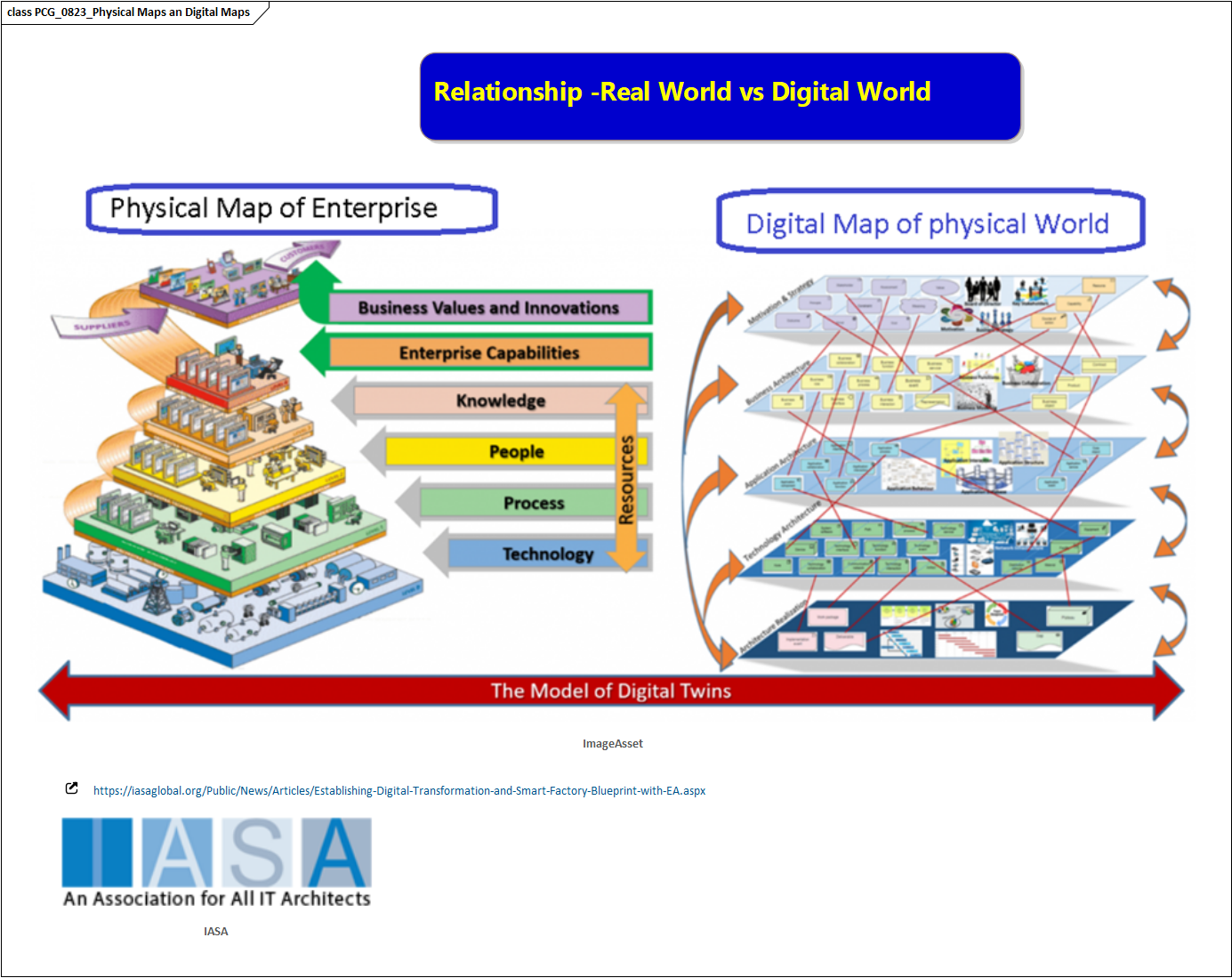
Why do we put so much effort into mapping reality to the digital world? I believe it is because:
- It increases the chance of shared understanding among roles and people within the solution lifecycle.
- It supports decision-makers.
- 3Rs: Right Information – for the Right Role – at the Right Time
💡 Tips and Notes
The presented topic is highly complex and requires techniques suited to complex challenges. See KNIFE Cynefin.
The core idea for addressing complex questions follows this pattern:
Probe → Sense → Respond
Try → Observe first experiences → Consciously react and refine your original understanding.
✅ Value / Summary – from Context and Approach point of view
Context view
What is better? A Bentley or a ŠKODA? Mac or Windows?
What is an application? What is a platform?
How many endless discussions and arguments, for and against. But why? Isn't it a pointless debate with no winner?
As long as the context for the question, problem, or challenge is not defined — there is no point in continuing the discussion or the solution.
Once we at least attempt to understand the solution context to a sufficient depth, we gain constraints and boundaries that fundamentally help us understand the solution, find the right answers — and to do so constructively. Without unnecessary arguing, quarreling, and wasting precious time.
Approach view
Which approach is better?
- V-Model (Waterfall)
- Iteration model (Agile, ...)
Which phase in the V-Model can we ignore? When? In which context?
Instead of fighting over which approach is better, I would suggest:
Adopt the approach to the context of your solution.
No tool, no technology will ever be perfect for all contexts. Our task is to understand the context and choose a good enough solution for that specific context.